External Roller Blinds
An internal blind can soften glare, but it can’t stop heat by the time sunlight passes through glass it’s already warming your room. An external blind intercepts the sun on the outside of the building, where it belongs.
Chadwick Designs supplies external roller blinds from Helioscreen and Markilux precision-made systems available in manual and motorised operation, with cable guide or side-channel retention, in a wide range of fabrics and opennesses to suit every application.
- Size
Minimum: 800mm width x 800mm drop
Maximum: 6000mm width x 6000mm drop- Warranty
5 year installation warranty
5 year manufacturing warranty- Starting Price
$1700
- Made In
Made in Germany or Australia
- — Low maintenance
— Fire retardant fabrics available
— Tear resistance
— Reduces sun’s heat by up to 90%
— Reduces air conditioning costs
— Sun and wind sensor options
— Stainless steel cable guide (Trac Fix), side aluminium channel or zip channel options
— Drop-arm and marquisolette configurations available
— Headboxes and cassettes to suit architecture
— Powder coat colours to suit
— Over 200 fabric colours available
Somfy is the world leader in window furnishing automation allowing comfort and convenient operation at a push of a button.
- Motorisation capable
-
Somfy TaHoma smart home hub
TaHoma is Somfy’s central smart home hub, connecting all your motorised blinds, awnings and shading into a single app. Control everything from your phone, set scenes and schedules, and integrate with Google Home, Amazon Alexa and Apple HomeKit for voice control and whole-home automation.
Sunis capable sun sensor
Sunis sensor is an outdoor sensor that will adjust your blind position based on the position of sunlight, potentially allowing you to control the light entering your home.
- Eolis Wind sensor
Eolis wind sensor is an outdoor sensor that will monitor wind strength and retract your blind to safety once the wind becomes strong enough to create damage.
- Telis 6 Chronis RTS capable Timer
Telis 6 Chronis allows you to control up to six separate zones, each on its own schedule — dropping or raising your blinds while you’re out of the house to manage afternoon sun or open up to morning light automatically.
+ More
For more information about this product, please fill out your details and one of our sales people will be in touch as soon as possible.
What is an external roller blind?
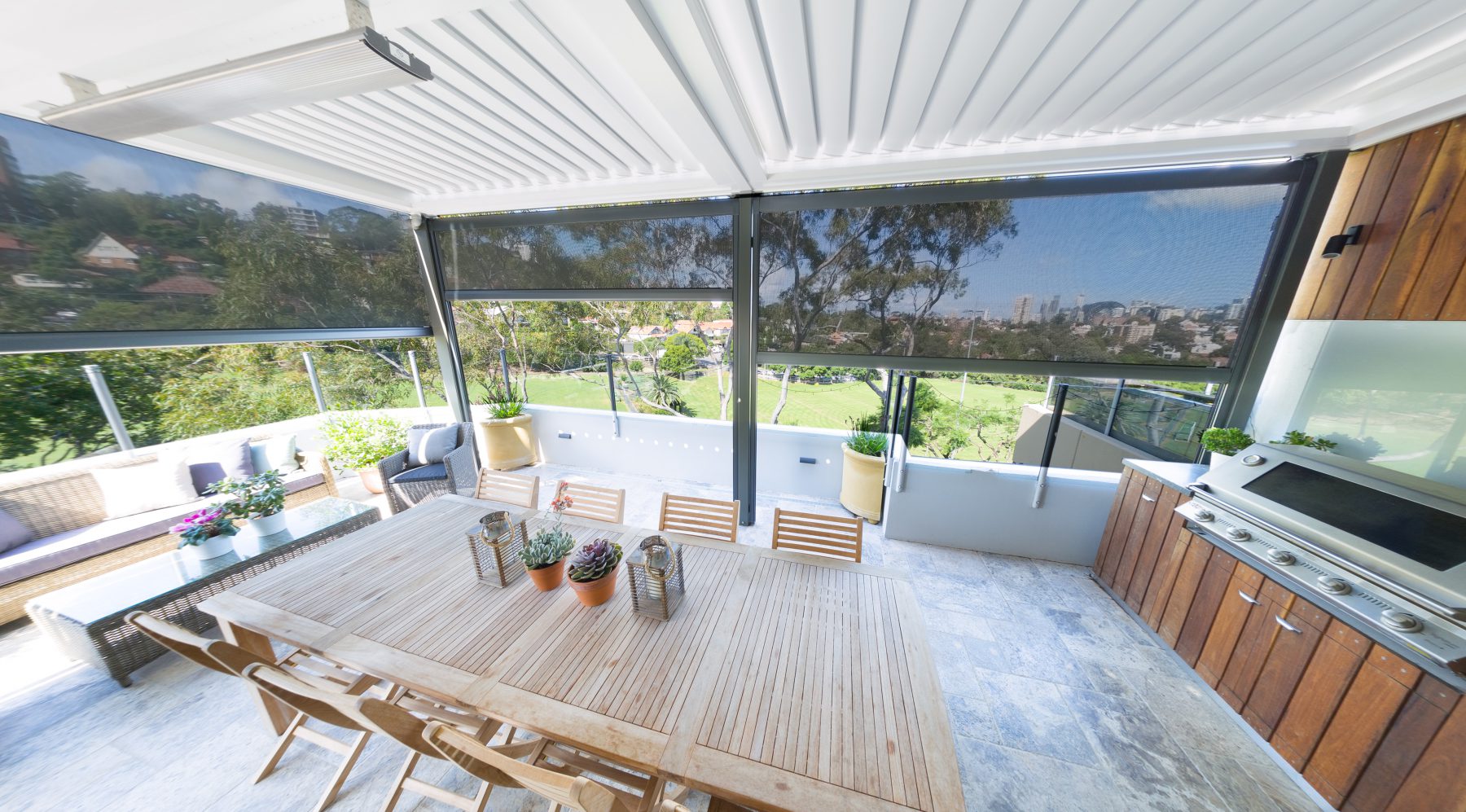
An external roller blind is a motorised or manual roller blind fitted to the outside of a window, door or alfresco opening. Because they sit on the outside of the glass, they intercept the sun before it enters — providing genuine heat reduction, glare control and privacy. External roller blinds suit pergolas, verandas, entertaining areas and window-facing north or west, where internal blinds struggle to make a real difference to temperature.
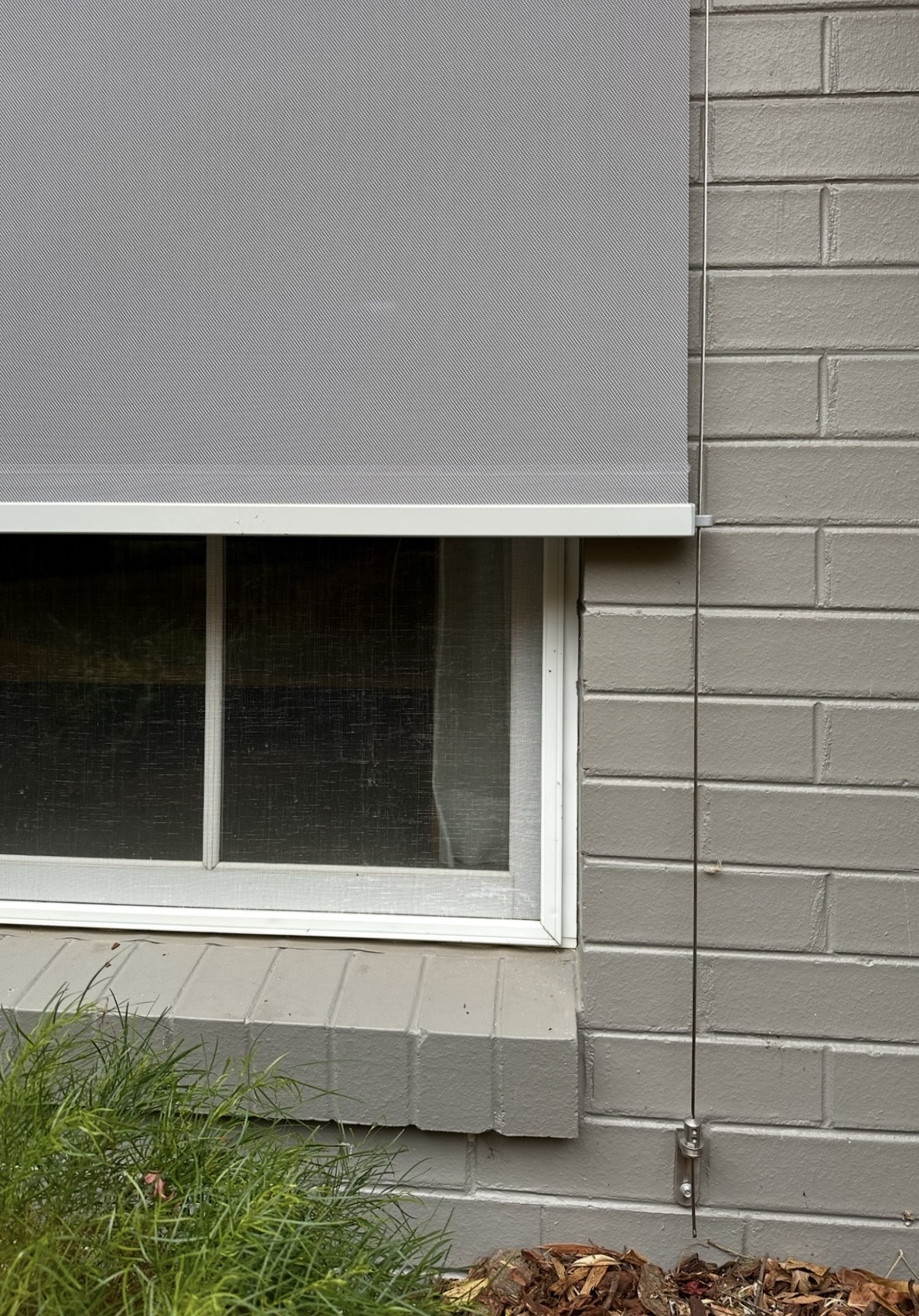
What is a cable guide system?
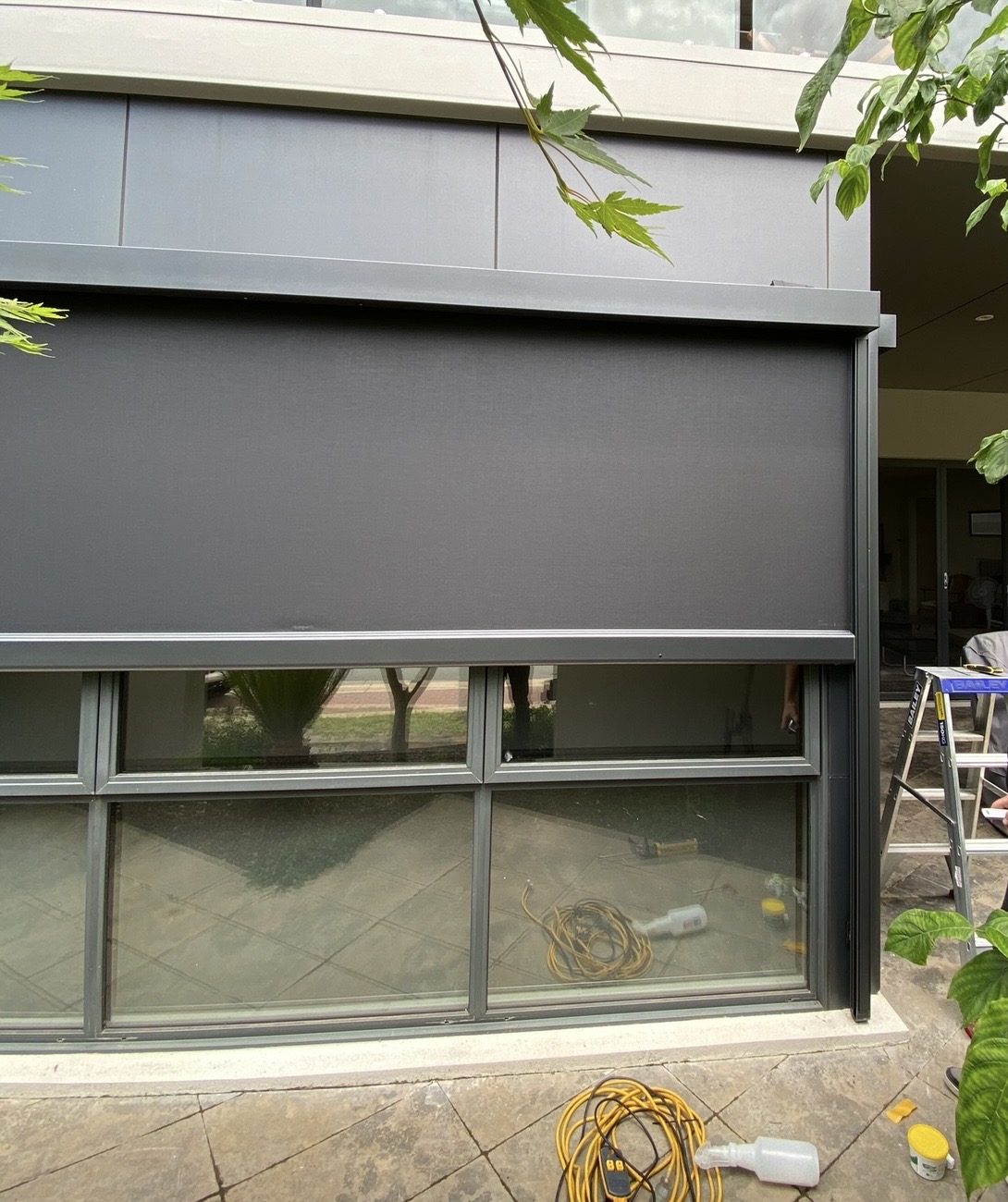
A cable guide — also known as Trac Fix or Zipp screen uses a pair of tensioned stainless steel cables running down each side of the blind to keep the fabric tracking straight as it rolls up and down. The fabric slides along the cables, keeping it flat and controlled even in light to moderate wind. Cable guides give a clean, minimalist look because there’s no bulky side channel just two slim wires against the wall or ceiling.

When is a cable guide the right choice?
Cable guides work well in sheltered or semi-sheltered positions — underneath a pergola, beneath an eave or in a protected courtyard — where wind is occasional rather than constant. Because the fabric slides freely along the cables rather than sealing inside a channel, a cable guide system is best suited to shade and privacy rather than heavy weather protection. For exposed sites or areas that need to seal out rain and strong wind, a side-channel or zip-screen system offers a more complete barrier.
What is the difference between a cable guide and a free-hanging external blind?
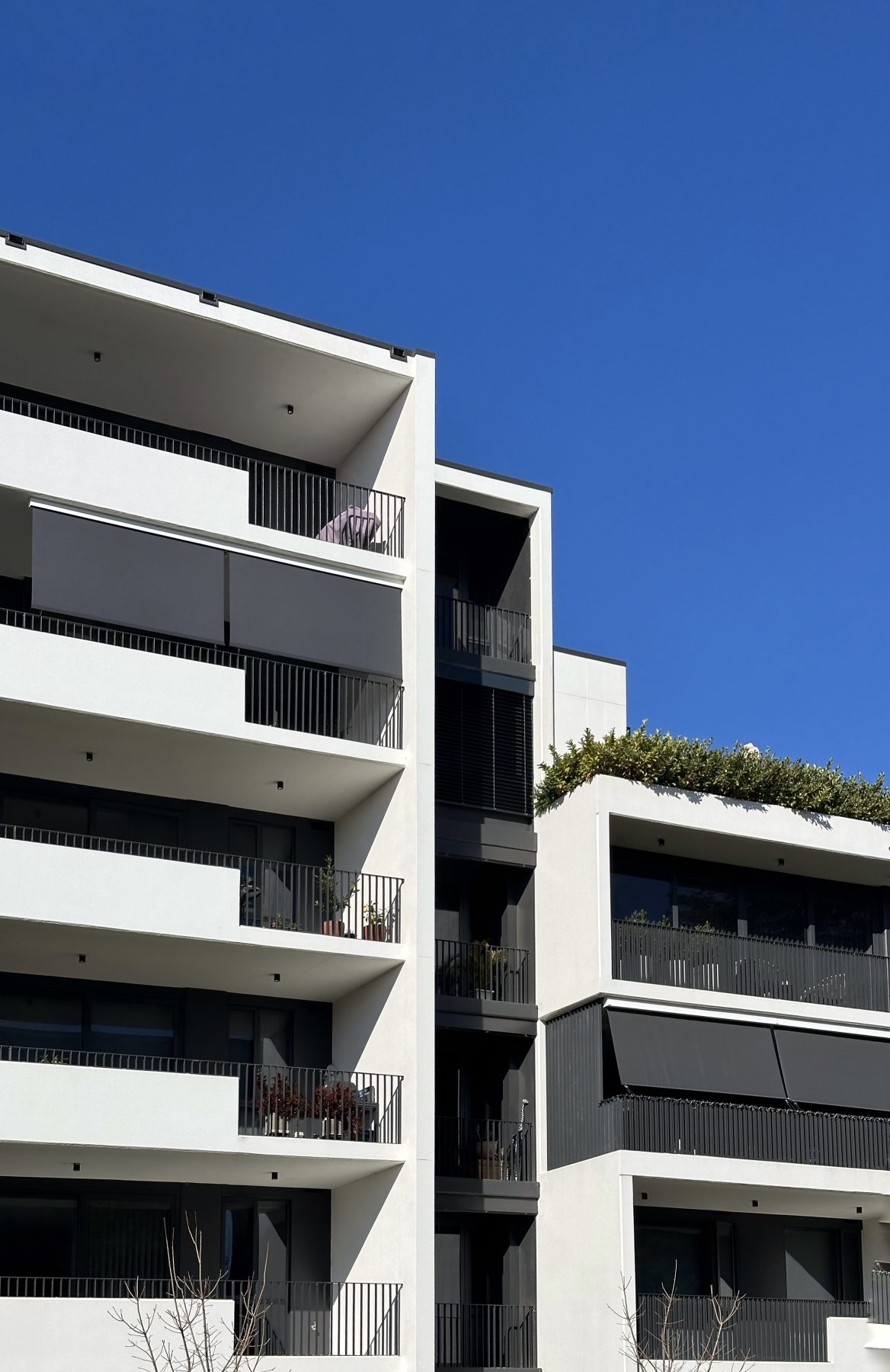
A free-hanging external blind (sometimes called a straight drop blind) has no side retention at all the fabric hangs from the roller and is held down by a weighted bottom bar. In still conditions it looks clean and works well; in wind it can billow, slap or wrap around itself. A cable guide solves this by giving the fabric guided edges, so it stays flat and controlled in light to moderate conditions. For most Canberra installations, a cable guide is recommended over a free-hanging system.
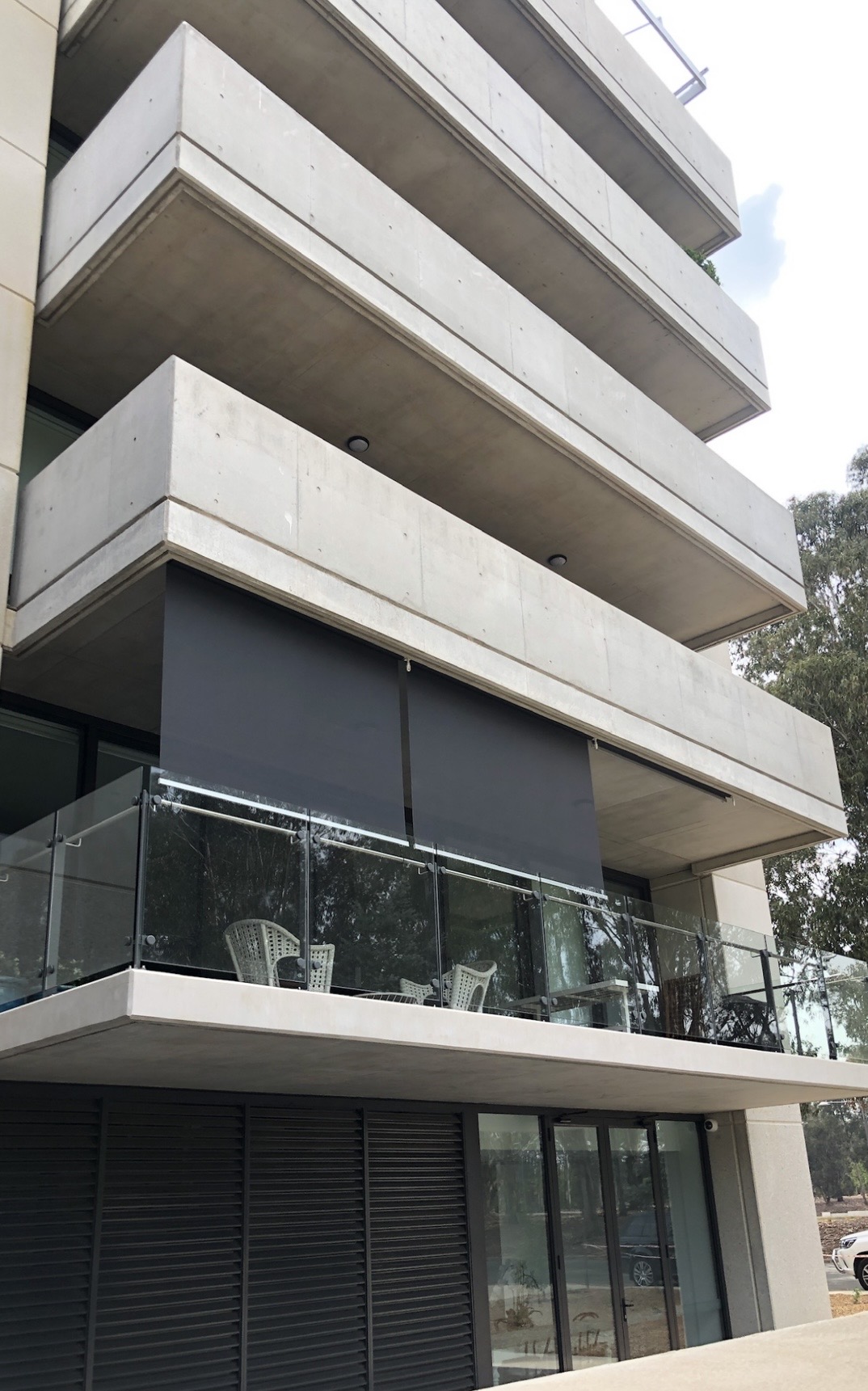
For balcony installations particularly in strata or apartment buildings there are aftermarket retention options that avoid any permanent attachment to the balcony structure. These systems use removable bottom-bar clips or peg anchors that tension the cables from above without drilling into the railing or balustrade, keeping the installation reversible and body corporate-friendly. When the blind is rolled up and not in use, the cables can be unclipped and stowed away completely, leaving the balcony clear with no visible hardware. It’s a practical solution for renters or apartment owners who want the performance of a guided system without a permanent footprint.
Should I choose a motorised or manual external blind?
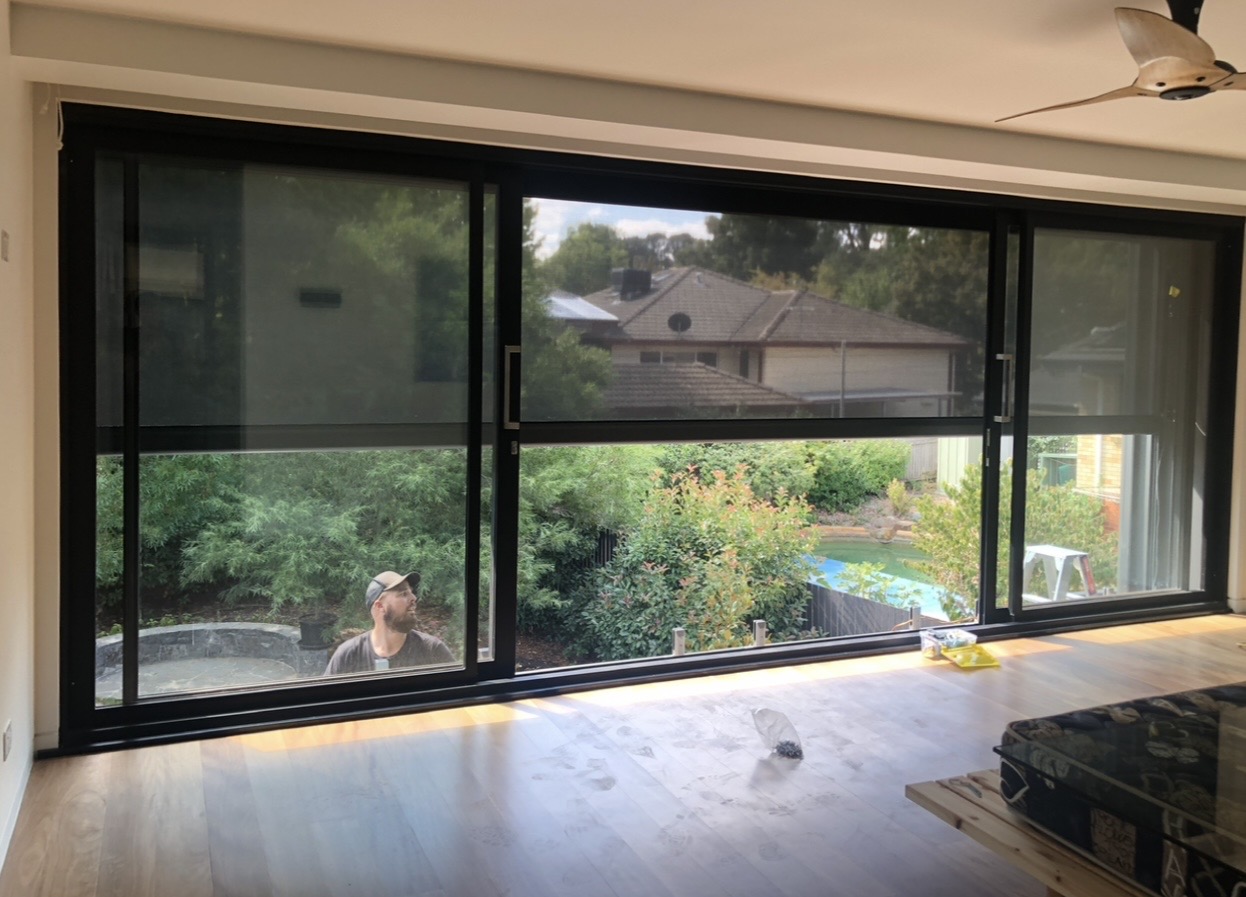
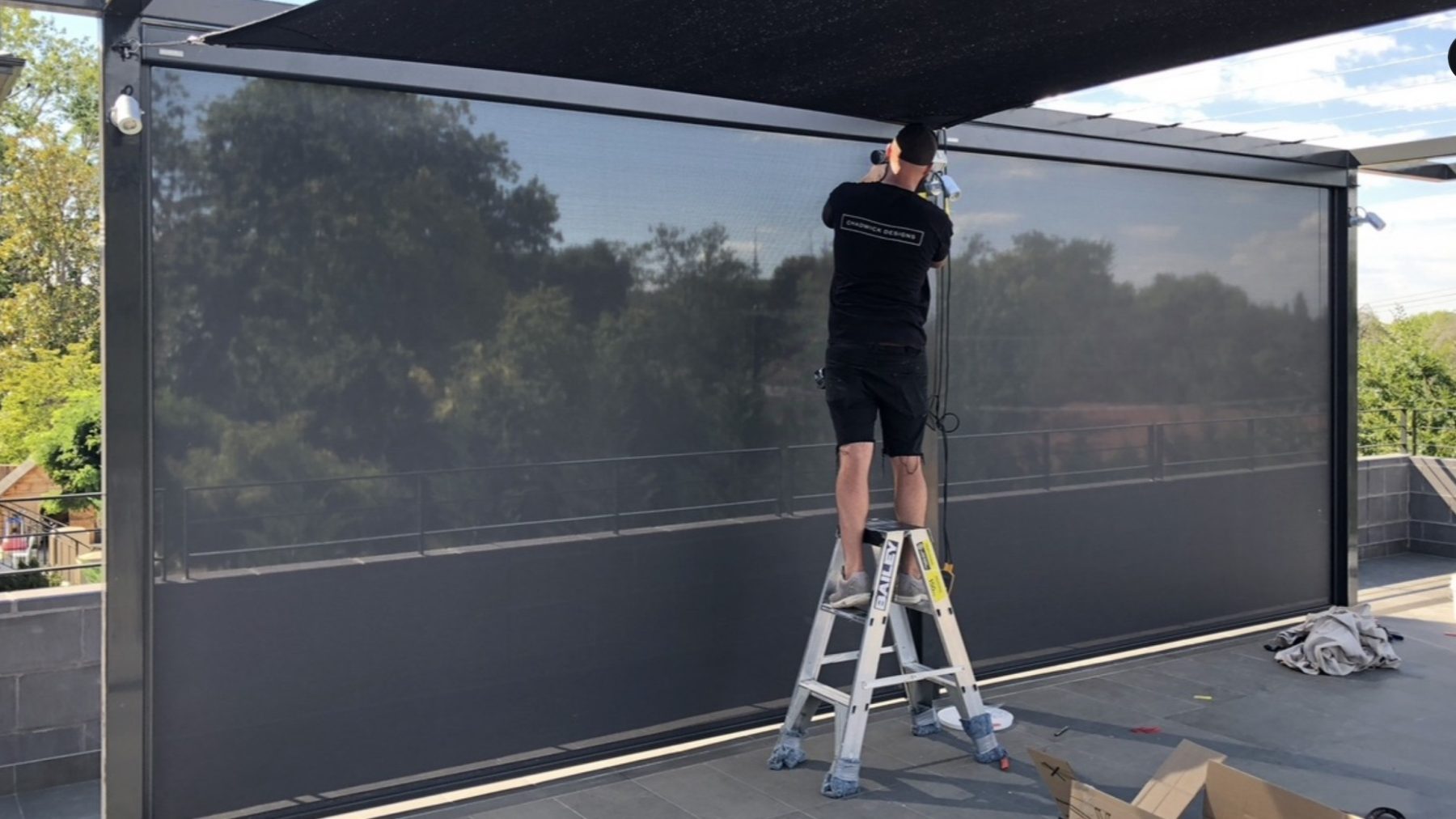
Both options are available. Manual blinds operate with a side-winder strap — a reliable, no-power option that works well for easy-reach installations used occasionally. Motorised blinds are controlled by a handheld remote and offer convenience, especially for high or hard-to-reach positions, or where multiple blinds need to operate together. For a verandah with three or four blinds, motorised operation means one button press covers them all.
What are the benefits of a motorised external blind?
A motorised external blind can be set to operate automatically using optional sensors. A wind sensor will retract the blind when gusts exceed a set threshold — protecting the fabric and mechanism without you having to think about it. A sun sensor can deploy the blind when direct sun is detected and retract it when it moves off, keeping your space comfortable through the day. Motorised external blinds can also integrate with smart home systems, including Somfy io and Apple HomeKit, so they can be controlled alongside your other automated shading.




Which Helioscreen external blind is right for my opening?
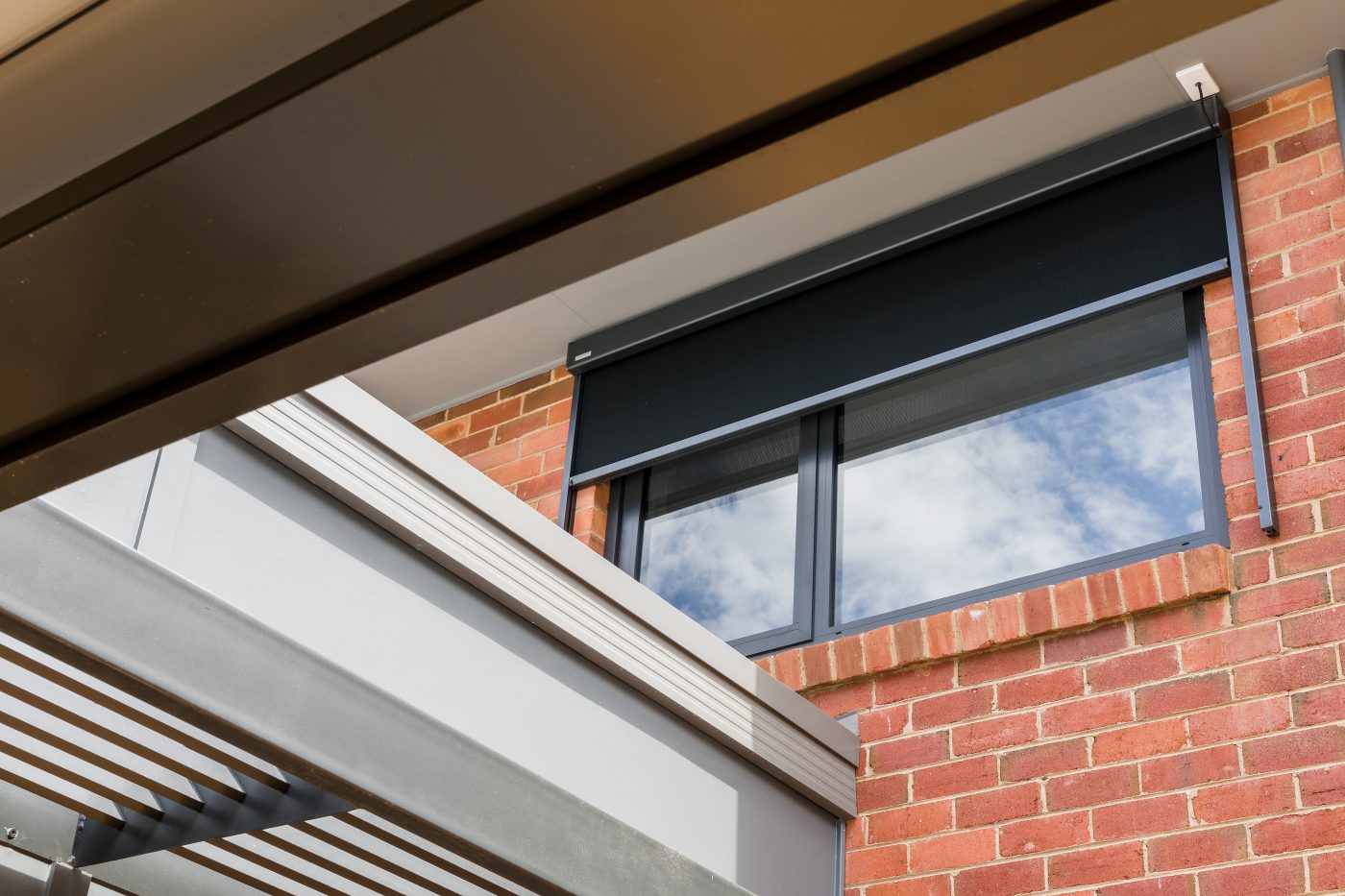
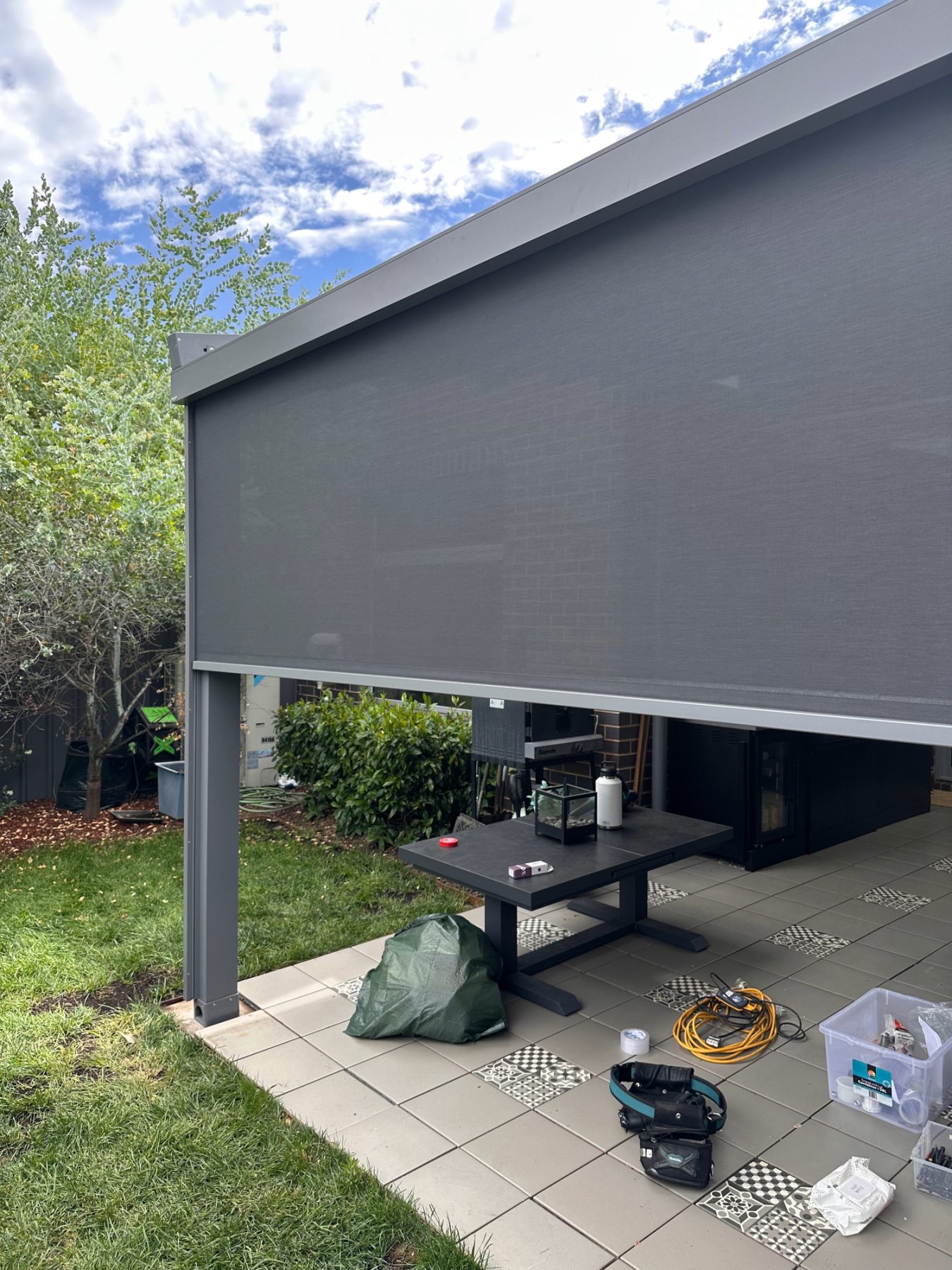
Helioscreen’s external roller blind range centres on two models — the HMX100 and the HMX130 — each sized for different applications.
The HMX100 has a compact 100 × 120mm headbox and suits standard windows, doors and moderate-size openings up to 3.2m wide by 3.2m drop (covering up to 9m²). It’s the most versatile model in the range, available with stainless steel cable guides (Trac Fix), aluminium side channels, or a zip channel — giving you options from a minimal cable-guided installation through to a full weather-sealed zip screen. Multiple units can be linked side by side for wider coverage.
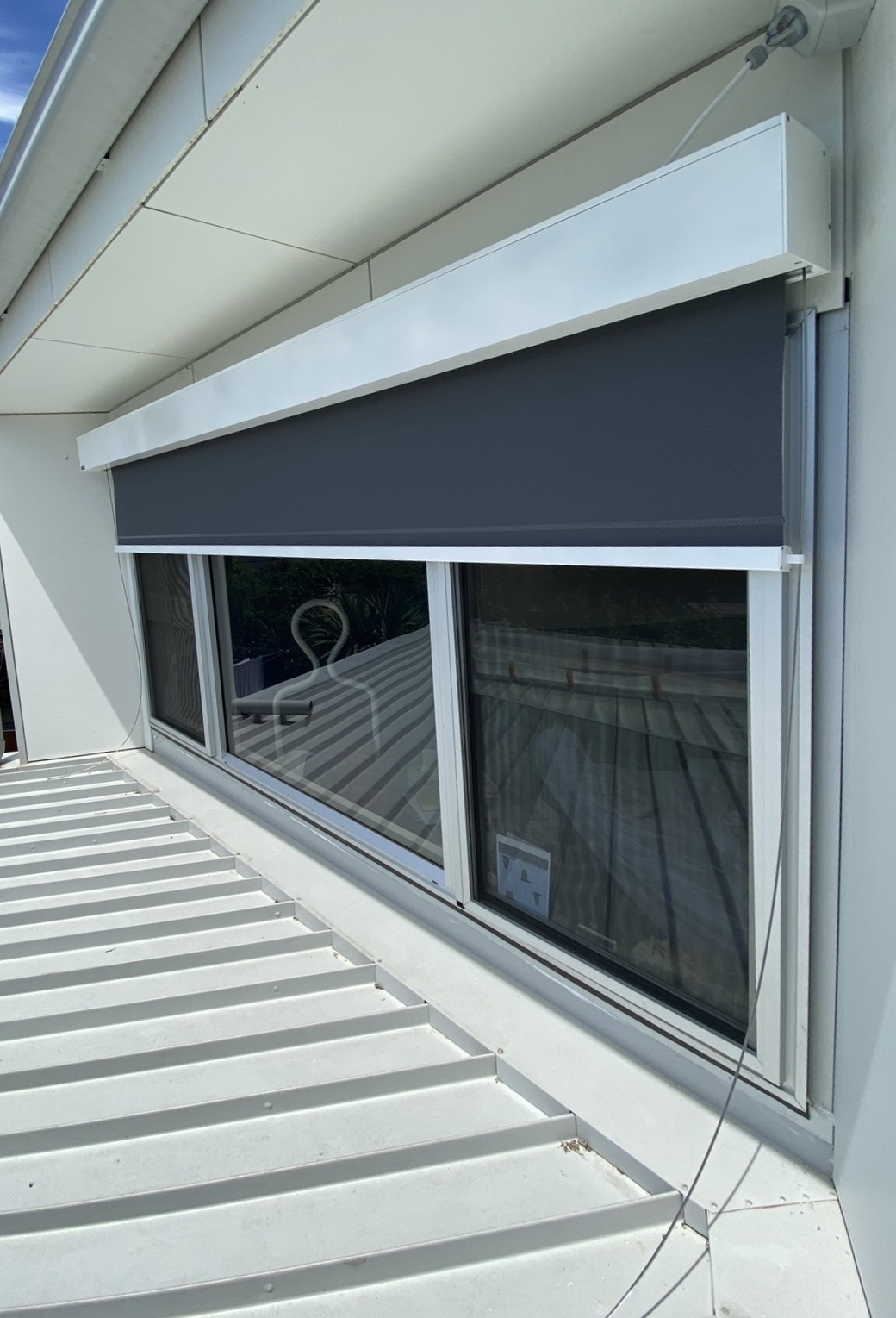
The HMX130 steps up for larger openings covering widths up to 6m and drops up to 4m with a correspondingly larger 130 × 150mm headbox. It suits wide alfresco areas, commercial facades and any opening where a standard-size blind would fall short. At this scale, the side-channel or zip guide options provide the lateral stability the larger fabric area needs. Like the HMX100, it can be linked in a row for broad coverage across a full building facade.
Both models are manufactured in Australia by Helioscreen, available in a wide range of sunscreen and blockout fabrics, and can be specified in manual or motorised operation.
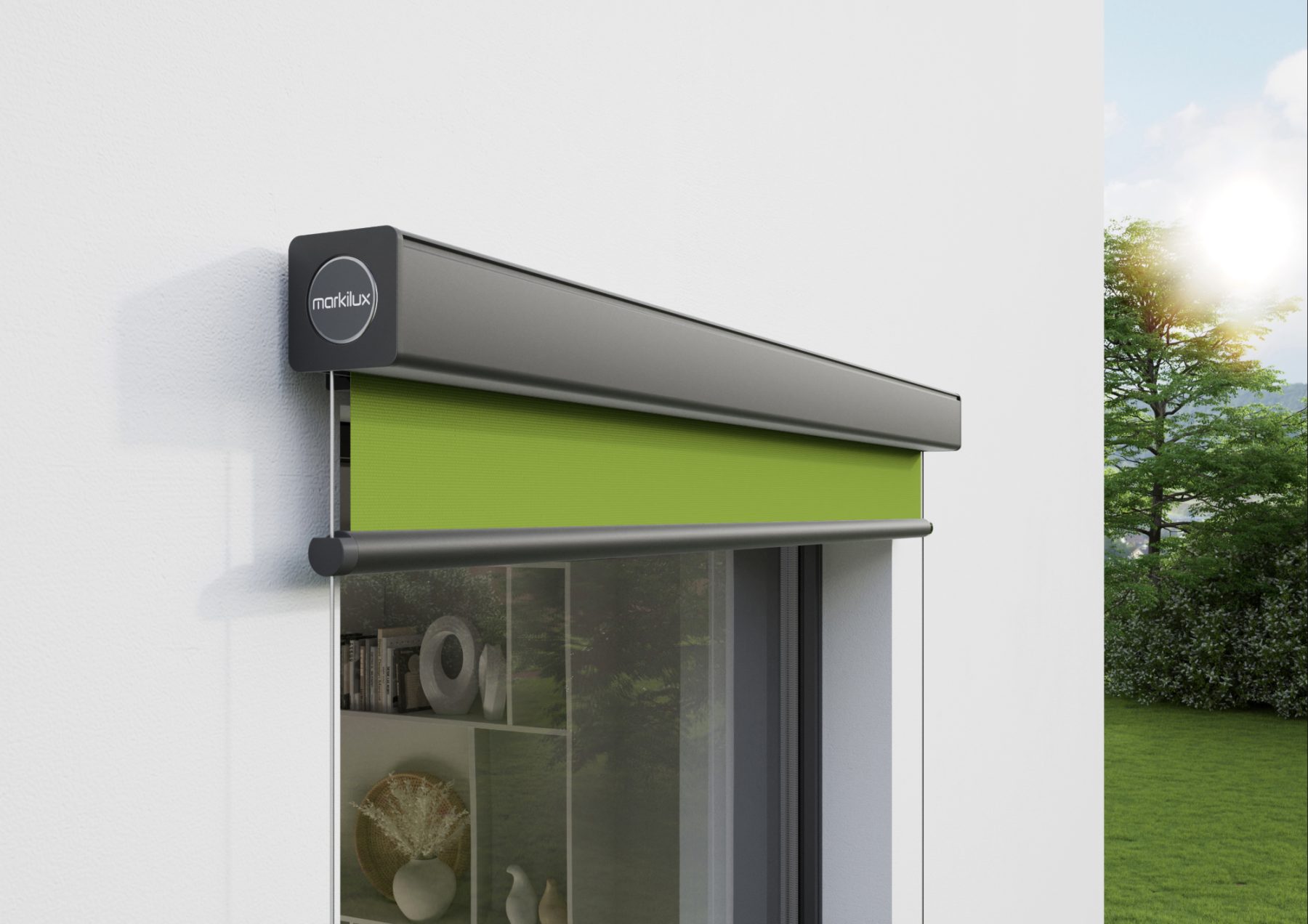
Which Markilux external blind is right for my opening?
Markilux makes several external vertical blind systems, each designed for a different scale and application. All share the same quality of engineering and retract into a neat cassette — either square or round profile depending on the model.
The Markilux 710 — cable-guided blind for medium-size openings
The Markilux 710 is a vertical cassette blind that bridges the gap between a basic window blind and a larger facade system. It covers widths up to 5m and drops up to 3.5m (up to 17.5m²) considerably wider than the 720 making it suitable for medium-size windows, bifold door stacks and verandah openings where a compact solution is needed without stepping up to a full structural system.
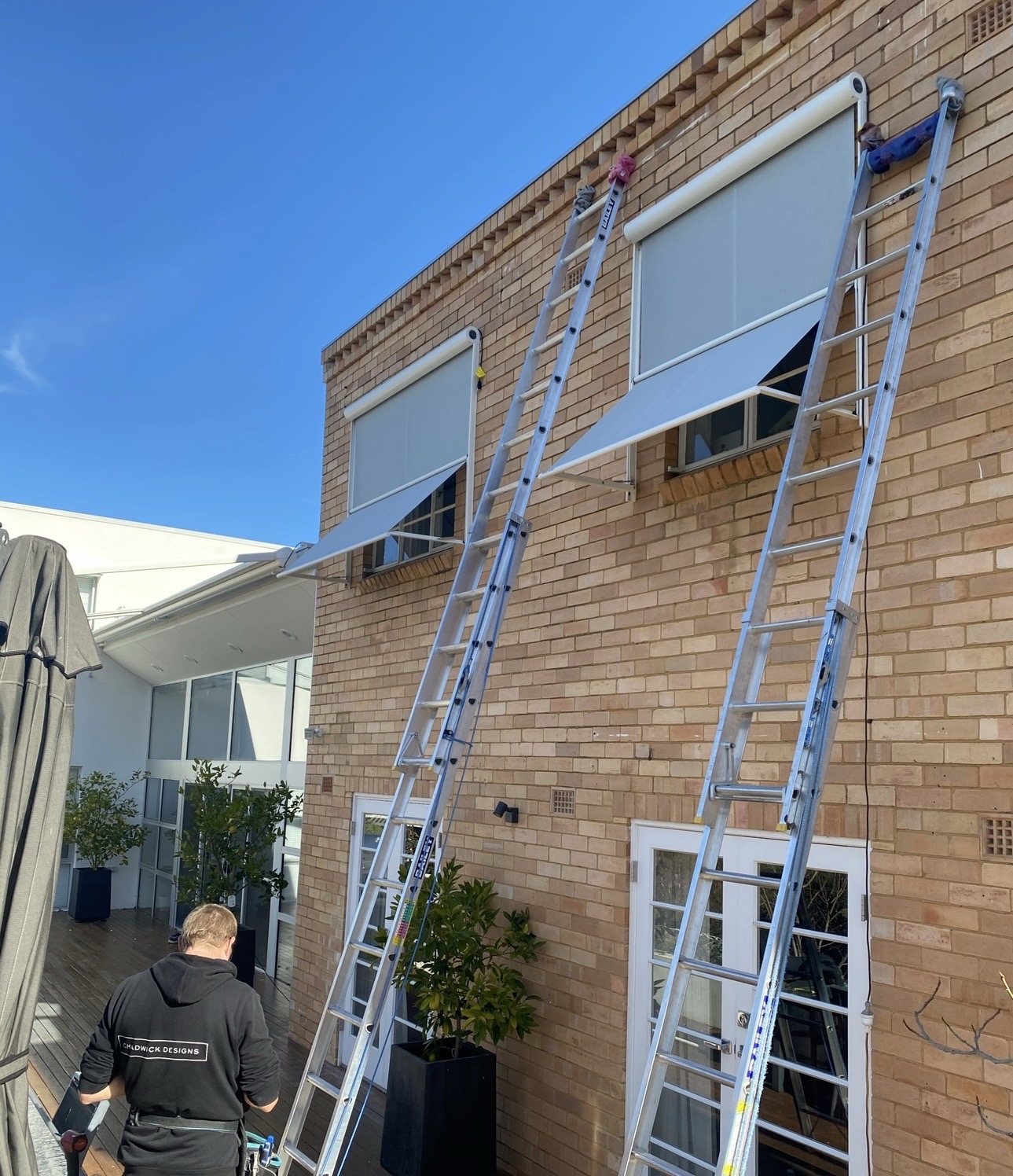
Its guide system uses plastic-coated stainless steel cables to keep the fabric tracking straight, with gravity providing the natural downward tension. The 95 × 95mm square cassette is the same slim profile as the 730 and 740, so it sits neatly against any building face without dominating the facade. Mounting options include face fix, top fix or reveal fix to suit different window and wall types.
The 710 can be operated by manual crank with the option to crank from inside the building or by hardwired or radio-controlled motor with optional sun, wind and rain sensors for automatic operation. Over 200 fabric options are available including Transolair, a specialty fabric that diffuses light and reduces glare while still allowing an outward view.
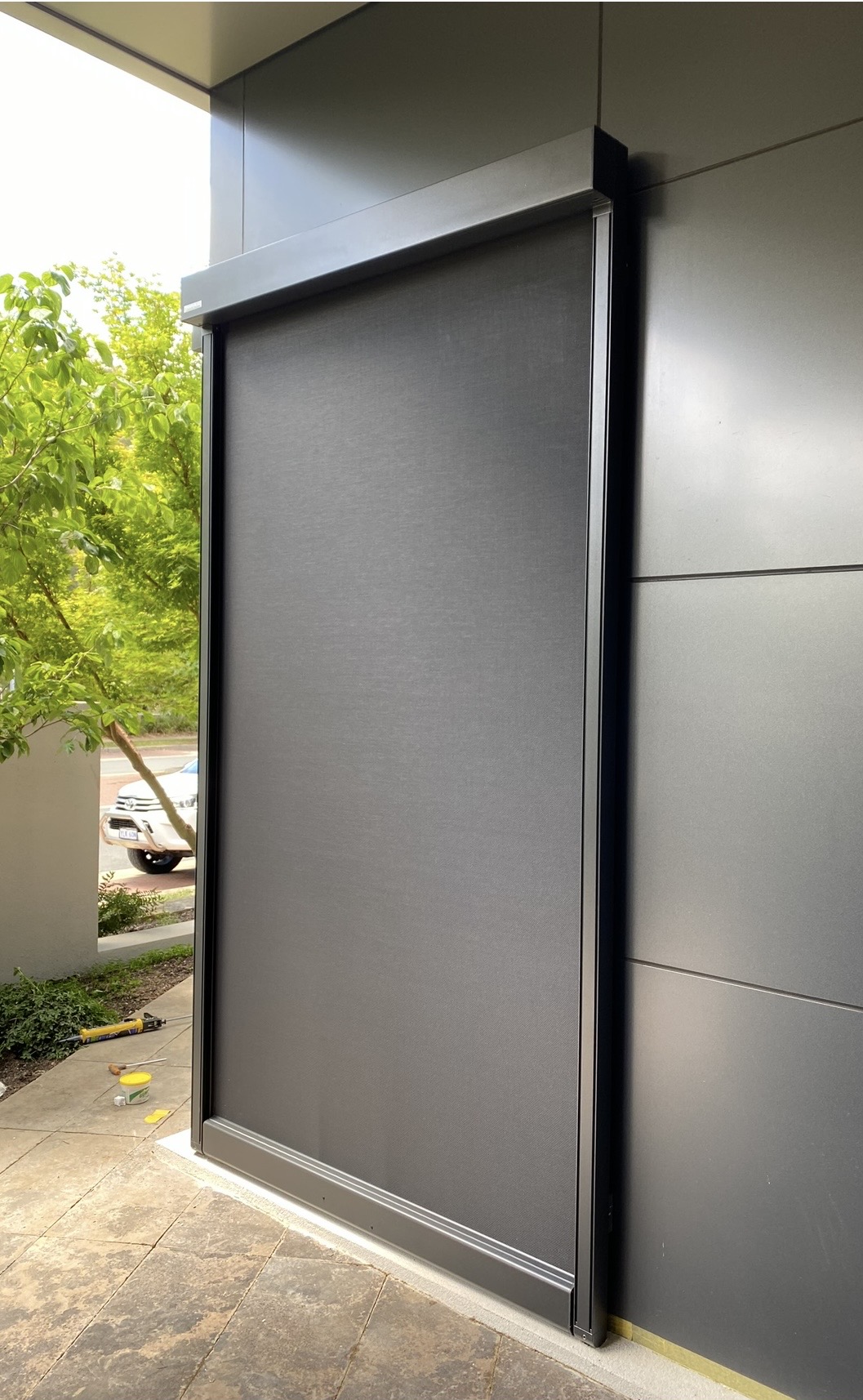
The Markilux 776 steps up for large facades, wide pergola sides and significant glazed areas — covering up to 6m wide by 3.5m drop, or 4m wide by 6m drop, with a maximum area of 24m². Gas springs maintain fabric tension across the larger span, and optional panoramic window sections can be built into the drop for a view without losing shade. It also accepts Tracfix cable guidance for additional wind stability. This is the model for architectural-scale projects.
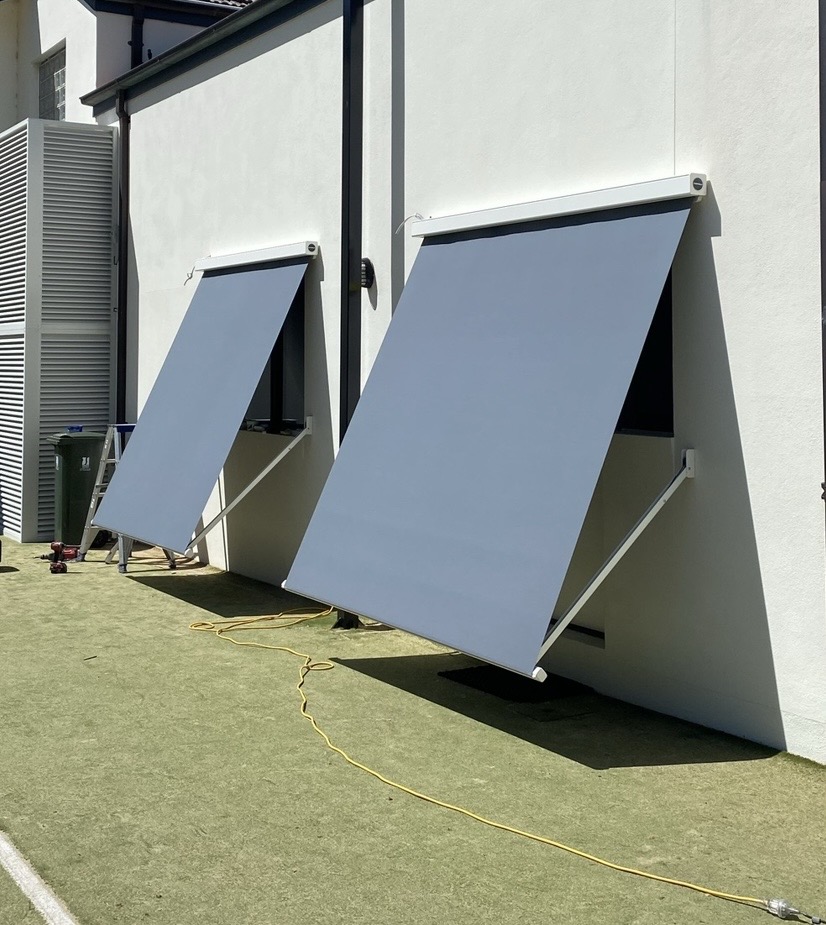
The Markilux 730 — drop-arm blind for wide openings
The 730 is Markilux’s larger drop-arm system, covering widths up to 700cm and areas up to 17.5m² well suited to wide balconies, large windows and alfresco facades. The gas-spring arms extend to four different lengths (80, 100, 120 or 150cm) to control how far the fabric projects from the wall. For balcony installations, optional telescopic standpipes mount between floor and ceiling, requiring no drilling into the balustrade or railing an advantage where body corporate approval is required. Available in manual crank or motorised operation.
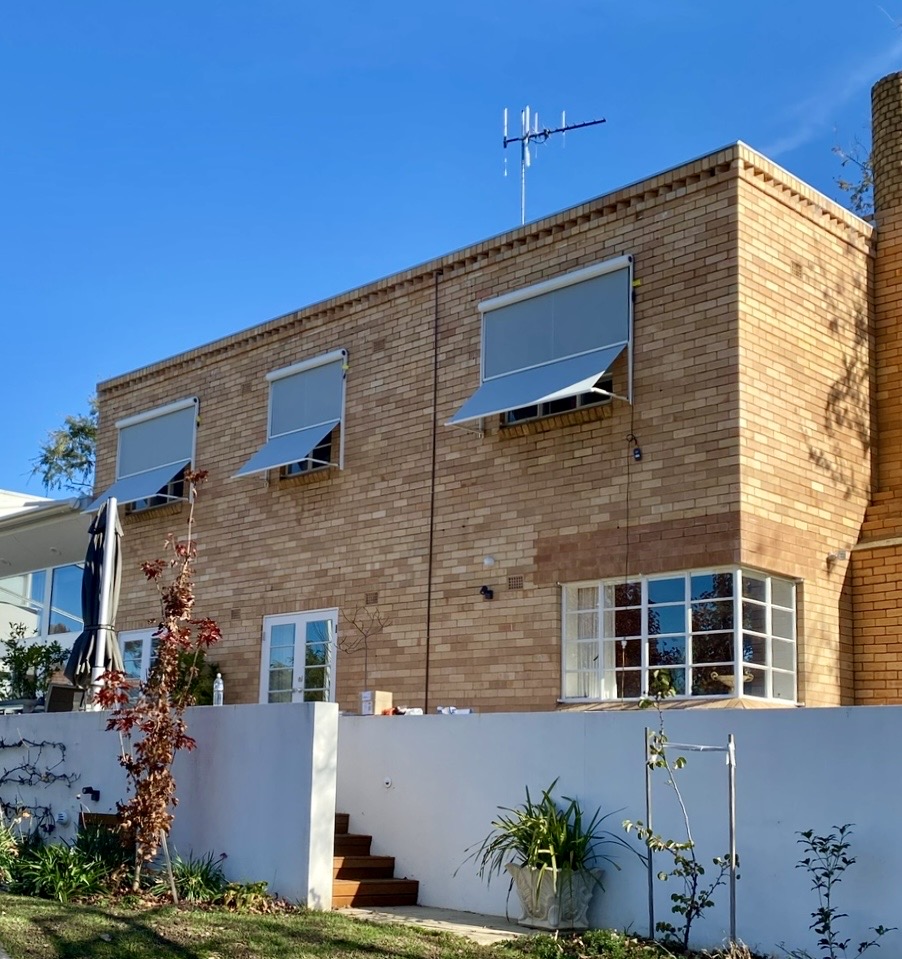
The Markilux 740 — marquisolette for flexible light control
The 740 is a marquisolette a hybrid between a vertical blind and a drop-arm awning. The upper portion of the fabric runs in a side guide rail, while the lower section is held out by drop arms with stainless steel gas-pressure springs. This gives you the option to angle the lower section for a view through the bottom while the upper portion provides full shade above particularly useful for ground-floor rooms where privacy matters at eye level but sky light is welcome above. Covers openings up to 300 × 300cm, with wind resistance rated to Class 2 (up to 37 km/h).